During undergraduate studies, it is common for discussions about the power sector to focus on what is most visible or associated with innovation: renewable sources, grid expansion, and new generation models. The infrastructure that supports this system, on the other hand, usually appears peripherally, almost as a given, already resolved element. But in practice, that is not exactly how it works.
Recently, I had the opportunity to speak about this topic with undergraduate students at PUC, in a direct conversation about what it actually means to work with electrical infrastructure on a daily basis. Part of what motivated this exchange was sharing with the students a bit of what we experience at BR INFRA and showing, in a practical way, what it is like to work with electrical infrastructure, bringing to the classroom some of the real dynamics of Projects and what makes this segment so interesting for those starting out.
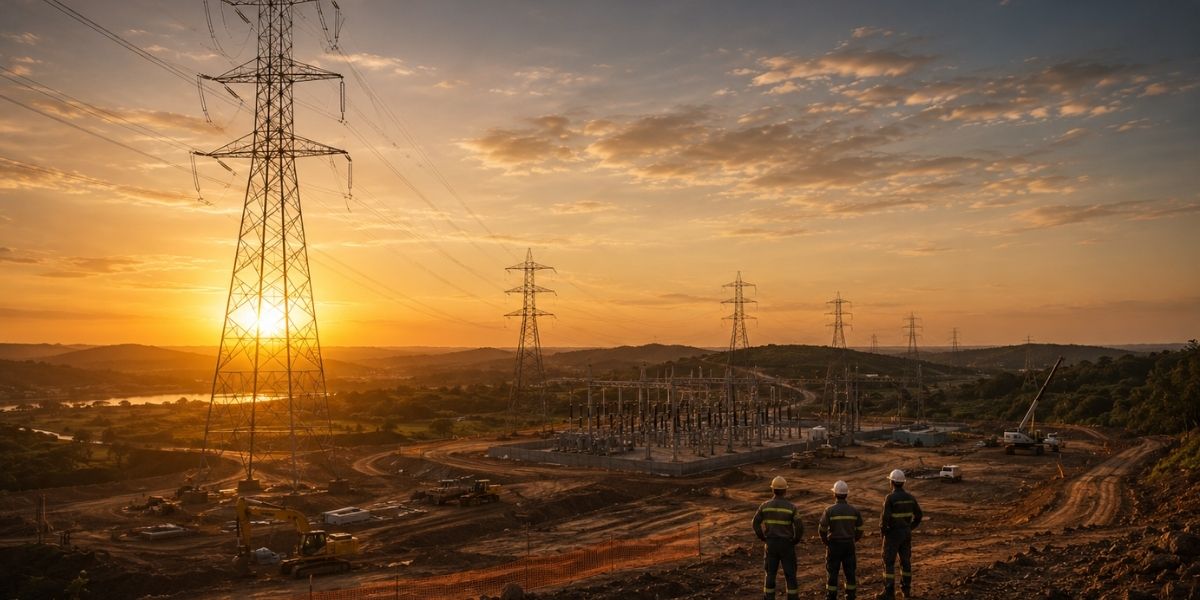
The implementation and modernization of substations are also among the most critical points in the electrical chain. These are assets that concentrate relevant technical decisions, integrate different engineering disciplines, and operate under a high level of regulatory requirement and reliability. As the system expands, with a greater diversity of consumers and generators, growth in the free market, and increased operational complexity, the role of substations becomes even more strategic. This context has a direct effect on the type of opportunity the sector offers.
Unlike other more compartmentalized areas, working with electrical infrastructure requires a broader reading of the project. Performance is not limited to an isolated specialty. It involves understanding how engineering decisions impact planning, procurement, field execution, and client relationships. This integration, which often does not appear in a structured way in academic training, becomes part of the daily routine. And it is at this point that the segment stands out as a professional development environment.
Substation Projects operate with real and simultaneous constraints. Regulatory deadlines, constructive feasibility, technical compatibility, and cost control are not independent variables. They are dimensions that need to be handled in a coordinated manner, and this requires the professional to have an analytical capacity that goes beyond conceptual mastery. Consistency in decision-making and execution discipline become just as relevant as technical knowledge.
For this reason, the most valued profile in the sector tends to avoid extremes. It is not just about technical depth, nor just about management capacity. The differentiator lies in the combination of structured reasoning, clarity in prioritization, organization, and commitment to delivery. There is an implicit expectation that the professional can transform analysis into results, maintaining predictability throughout the process. This level of demand also explains why the sector maintains a consistent demand for qualified professionals.
The Brazilian power sector continues to expand and, at the same time, undergoes a continuous process of updating. The need for new connections, capacity reinforcements, and modernization of existing assets sustains a permanent agenda of projects. In this scenario, the availability of professionals with applied repertoire is still limited, especially those who can navigate safely between design and execution.
For those in training or in the early years of their career, this opens a less obvious but very consistent path. Electrical infrastructure is not a segment of immediate exposure or superficial recognition. It is an environment where the result appears in the delivery of the project, in the stability of the operation, and in the trust built with the client over time. In return, it offers solid training based on real context, where professional evolution is directly associated with the ability to take on increasing responsibility.
For those who live this daily, what draws the most attention is not just the technical complexity, but how much you are pulled into practice from early on. You start by understanding one part of the project and, before you know it, you are already discussing interfaces, deadlines, and field solutions. Not because someone asked, but because the project demands it. This changes the way you learn. And, above all, it changes the way you work.
For those in engineering who want an environment where work is not restricted to paper, it is worth looking more closely at electrical infrastructure and substations. It is a demanding path, but one that builds skills quickly and consistently. In the end, you stop just studying how things work and become responsible for making them work.
About us
We are a Brazilian EPC (Engineering, Procurement, and Construction) company, with 18 years of experience in the electrical infrastructure sector. We work with a focus on reliability, excellence in execution, and technical decisions aligned with long-term strategy. Our mission is to transform people and sustain the infrastructure of tomorrow’s world.
Discover our projects and be part of the evolution of the energy sector in Brazil: www.grupobrinfra.com