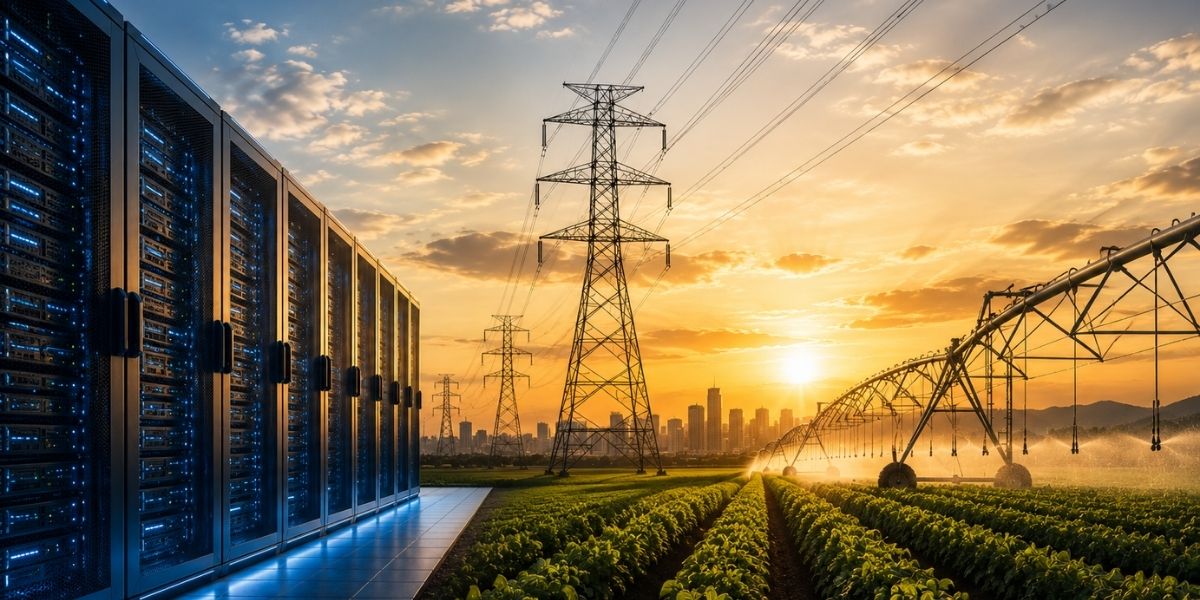
Two recent publications caught our attention because they deal with completely different sectors but point to the same reality.
The first, published by Brazil Journal, addresses the advancement of data center investments in Brazil and the challenges of transforming the country into one of the main global destinations for this type of enterprise. The second, published by Forbes Agro, discusses the projected increase of up to 2.9 GW in energy demand in Western Bahia to sustain the expansion of irrigation, agribusiness, and storage in the region.
Although the two topics seem distant from each other, there is a common element that helps explain much of the economic transformations underway in the country.
Both the expansion of data centers and the growth of agribusiness depend on the ability to provide energy in a secure, reliable manner that is compatible with the pace of investment.
When it comes to artificial intelligence, the discussion usually revolves around technology, processing, and innovation. In agribusiness, the focus usually falls on productivity, mechanization, irrigation, and increasing productive capacity. These are important debates, but they often overlook a basic condition for all of this to happen: the availability of adequate electrical infrastructure.
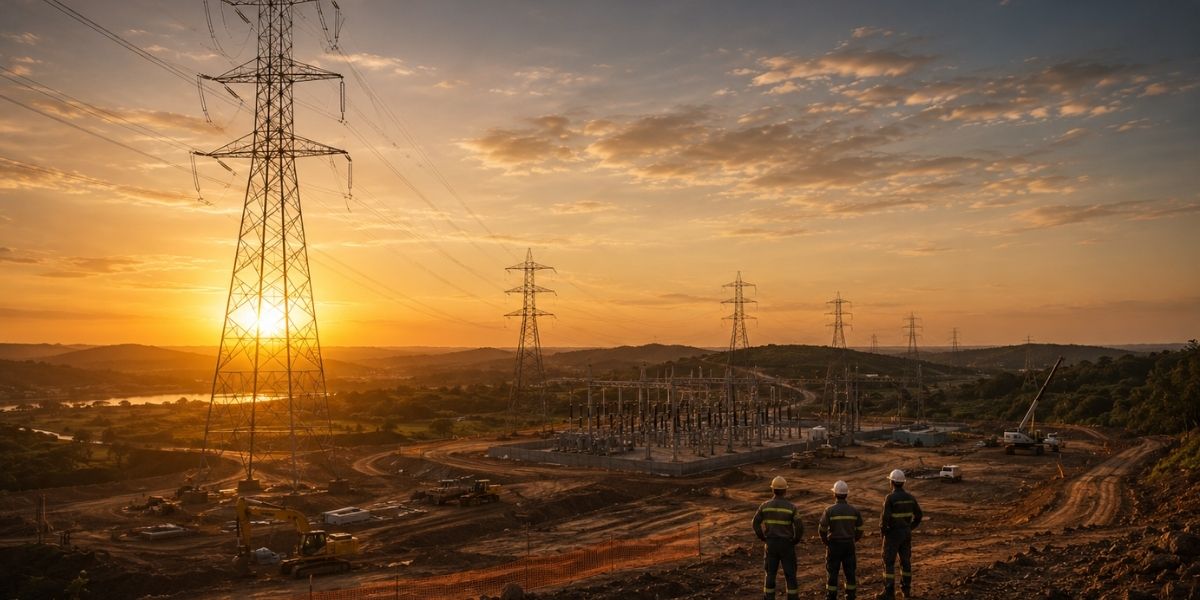
No data center goes into operation without access to a reliable power source. Similarly, the expansion of highly technical agricultural regions depends on sufficient installed capacity to support new irrigation, storage, processing, and logistics systems. In both cases, the discussion inevitably involves grid reinforcements, new substations, capacity expansions, protection systems, automation, and investments capable of keeping pace with the speed of the transformations occurring in the economy.
The most interesting aspect of these two examples is perhaps what they reveal about the country’s current moment. For a long time, infrastructure was seen as a consequence of economic growth. First, demand would arise; then came the necessary investments to meet it. Today, in many cases, the logic is reversed. The speed of expansion in certain sectors requires that infrastructure be planned and executed in advance so that investments can get off the ground.
Companies make investment decisions based on predictability, large-scale projects depend on reliable schedules, and entire regions increase their competitiveness when they are able to receive new enterprises without energy availability becoming a limitation. Therefore, discussions about artificial intelligence, data centers, agricultural expansion, and regional development ultimately converge on the same point: the ability to execute the projects that will support this growth.
Brazil possesses characteristics that place it in a privileged position to attract investments in energy-intensive sectors. Transforming this potential into concrete development, however, requires planning, coordination, and delivery capacity.
The servers that sustain the digital economy and the systems that drive one of the country’s most productive agricultural regions seem to be part of different stories. In practice, both depend on the same foundation to prosper. A foundation that rarely makes the headlines, but remains decisive for the future of any development project: the ability to build, expand, and operate the infrastructure that connects opportunities to reality.